Solutions for Manufacturing industry

Solutions to support your pursuit of operational excellence

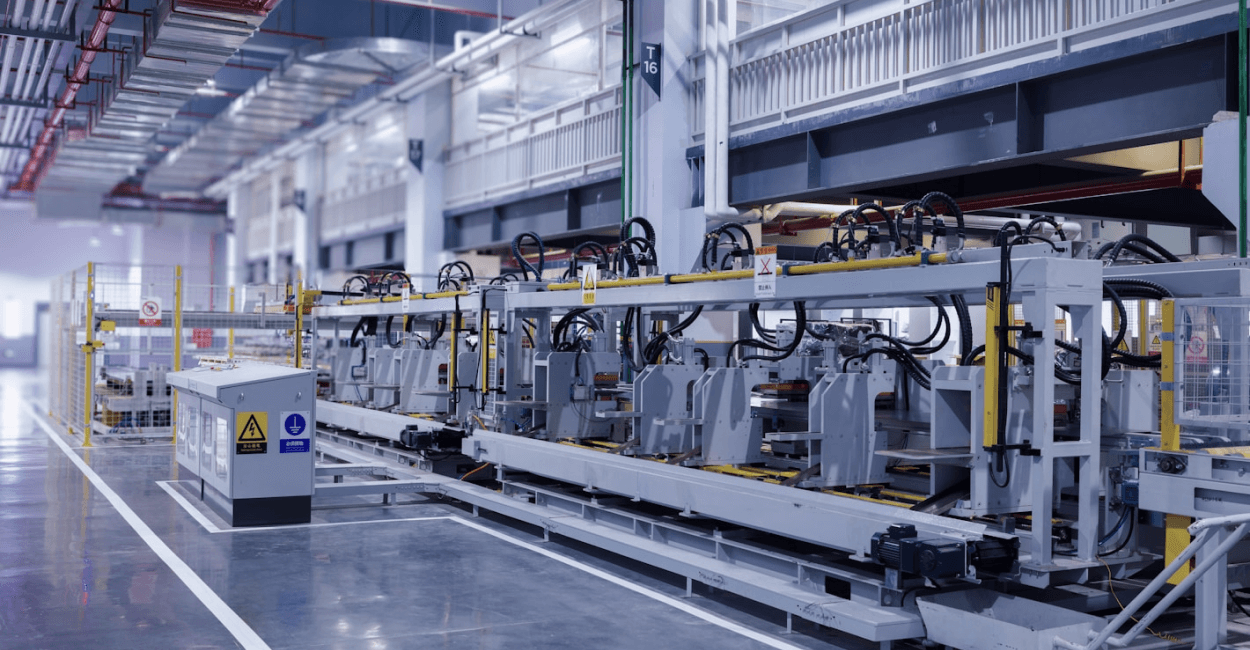
Interior of a manufacturing plant

Smart factory

We offer an integrated environment that verifies and analyzes data from various sources – from SCADA and historian systems, through APIs, to databases and Big Data platforms. Users receive a complete picture of processes in real time.

Our IT solutions for the manufacturing industry enable defining, monitoring and reporting key performance indicators (KPIs). They provide quick identification of anomalies and downtimes, generate automatic notifications and offer advanced AI-based analysis functions, which allows for effective event management and improved communication at all levels of the organization. This leads to improved OEE, reduced errors, better resource allocation and faster and more accurate decision-making based on reliable information.

Group of operators control process on product line uses industry 4.0 and digital technology on smart factory.

Production monitoring

Using the best solutions available on the market and our industry knowledge, we securely integrate with automation systems, creating a structured source of truth about the state and history of production. Thanks to this, based on good quality data, we can analyze the current situation and forecast the future. Our IT solutions for the manufacturing industry give companies the ability to connect disparate systems into one unified ecosystem.


We are an AVEVA partner.

Guy monitors home electricity usage with smart home app.

Production optimization

The solutions used allow for measuring key indicators (KPIs), analyzing results and drawing conclusions, as well as implementing optimization programs. A carefully developed Digital Twin allows for the most faithful representation of reality in the digital environment. Combined with smart factory concepts, our IT solutions for the manufacturing industry enable better decision-making and long-term competitiveness.

Extensive security and authorization systems guarantee full data protection and compliance with regulatory requirements (NIS2, UKSC, and IEC 62443).

Platform data management on a dashboard with operational charts.

Reporting

Our experience and IT and industry knowledge allow us to use both typical reporting tools, such as Power BI, as well as more advanced solutions that allow for presenting the situation in real time. This allows for ongoing verification of plan implementation and reporting at any level of detail – from hours, through shifts and days, to entire months. With our IT solutions for the manufacturing industry, reporting becomes automated and scalable.


Read more about reporting: https://smartrdm.com/reports/

A fragment of a computer screen with an analytical panel, reports, and data charts.

Media monitoring

Media monitoring in production plants plays a key role in cost optimization, ensuring production continuity and increasing energy efficiency. It includes, among others, monitoring the consumption of energy, water, gas and compressed air, which allows for the identification of losses, elimination of inefficiencies and better resource management.

We carry out media consumption monitoring projects, support the implementation of advanced analyses of consumption costs per unit of production and consumption prediction. We correlate data on media consumption with data from production processes. We provide solutions in the field of reporting, alarming (power guard) and process management in the area of ​​media consumption monitoring.

Media monitoring in an industrial environment by an operator or engineer
icon

Improving energy efficiency

Using predictive analytics, environmental data, and process and production data, we provide detailed consumption forecasts and recommendations for production plans that optimize the unit cost of media consumption. 

We support companies in managing their own energy sources and using energy from renewable sources. Good energy balance management brings tangible benefits, especially in conditions of volatility of media prices and their impact on production costs. Our IT solutions for the manufacturing industry also integrate energy management with operational decision-making.

Knowledge bases

We support the creation of a knowledge base in an organization, which is a key tool in information management in production plants. It enables the collection, organization and sharing of knowledge regarding processes, procedures and best practices. Thanks to the knowledge base, employees gain easy access to important information, which promotes work efficiency and innovation. 

We implement solutions based on artificial intelligence and support Clients in adapting the latest technologies. Our IT solutions for the manufacturing industry make knowledge available across all levels of the organization, empowering a truly smart factory environment.

The manager works on his laptop, and above his desk float icons in gears symbolizing the idea of a knowledge bases in which all elements are connected and organized.
Connectpoint - icon

Recommendations for action

Making better quality decisions quickly is key to improving operational efficiency. We use advanced computational algorithms that generate recommendations for operators, allowing them to choose the optimal action scenario.

Predictive Maintenance

Predictive Maintenance is a maintenance strategy that uses real-time data and advanced analytics to predict when equipment may fail. The main goal of PdM is to minimize unplanned downtime, optimize maintenance costs, and extend the life of machines and devices. Using process data from machines and devices, advanced analytics, and data structures (including Digital Twin), we support clients in building predictive models that estimate the probability of failure over time. Our methodology enables the organization of high-quality data, using the most advanced algorithms based on the CBM (Condition-Based Maintenance) and RCM (Reliability-Centered Maintenance) approaches. We use the knowledge of operators and maintenance services to continuously improve models, and we also measure the effects of their operation on an ongoing basis.

Discover our approach to PdM implementation that guarantees success.

Engineer operators using predictive maintenance system at industrial plant

Predictive Maintenance Strategy Tailored to Your Needs

Learn about the Predictive Maintenance implementation methodology built on best practices, completed implementations, and the latest technologies and tools (including machine learning and AI). With our IT solutions for manufacturing industry, Predictive Maintenance strategies are integrated seamlessly with production systems.

Environmental reporting

In the industrial sector, environmental reporting is becoming not only a regulatory requirement, but also a tool for increasing transparency, improving operational efficiency and building a sustainable business strategy. Environmental reporting is the process of collecting, analyzing and presenting data on the impact of a company’s activities on the environment in accordance with current regulations (e.g. EU ETS, EU Taxonomy).

It includes, among others:

  • CO₂ and other greenhouse gas (GHG) emissions, including the carbon footprint throughout the supply chain
  • energy consumption and energy efficiency
  • use of renewable energy sources (RES) and the share of green energy in the energy balance
  • waste management with optimization of recycling processes
  • water resource management, including monitoring and optimization of water consumption
An industrial chimney emitting steam or smoke against the backdrop of a clear blue sky.
Connectpoint - icon

CSRD (Corporate Sustainability Reporting Directive),

From 2024, it obliges large companies in the EU to report in accordance with the new ESRS standards (European Sustainability Reporting Standards).

Connectpoint - icon

EU ETS (European Emissions Trading System)

A system in which companies in the energy sector and other energy-intensive industries must report their CO₂ emissions and purchase emission allowances.

Connectpoint - icon

EU Taxonomy

A classification system for economic activities that determines their compliance with sustainable development goals and supports green investments.

icon

GHG Protocol

An international standard for reporting greenhouse gas emissions, covering three scopes: Scope 1 (direct emissions), Scope 2 (indirect emissions associated with purchased energy) and Scope 3 (other emissions throughout the value chain).

Assessment of the degree of digitalization

We support companies in analyzing the level of advancement of the company’s digitalization, which allows for planning the approach, verifying the level of investment and selecting the best solutions. Building a roadmap helps companies define goals and stages that need to be completed to effectively implement modern technologies. A well-planned roadmap takes into account both technological and organizational aspects, which facilitates the effective implementation of innovative solutions.

Industry 4.0 Modern Factory: Project Engineer Talks to Female Operator who Controls Facility Production Line, Uses Computer with Screens

How to prepare for the implementation of operational excellence?

The first step is to define clear goals that we want to achieve with the production monitoring system. Then it is worth building an interdisciplinary team, including employees from different departments, to take into account the needs of all stakeholders. It is also crucial to analyze existing processes and identify areas that require optimization. At the same time, it is necessary to specify what data will be necessary to achieve the assumed goals, how often to collect it, where to obtain it from, and how to secure it to gain maximum precision in the analysis of results. An important element of project planning is dividing it into stages and setting milestones, which will allow you to measure progress and efficiently pursue the set goals. At each stage – from OT data transmission to testing analytical algorithms – it is necessary to involve people responsible for verifying the correctness of the system’s operation. After the solution is launched, one should not forget about continuous improvement, based on monitoring effectiveness, collecting user opinions and regular improvements. Before the final choice of the tool, it is good to assess whether the selected solution will be scalable, in line with technological trends and will enable integration with other systems. Finally, it is necessary to ensure appropriate access to knowledge so that employees can benefit from experience and operational history, which will ensure the continuity of processes and maintain the developed standards at the highest level. Choosing proven IT solutions for the manufacturing industry helps ensure scalability, integration, and long-term efficiency.

Production line

Contact us

Ready for digital transformation in utilities or manufacturing?

Want to integrate SCADA or other enterprise systems and get your data in shape?
Struggling with gaps in production or grid analytics, or slow deployments?
With ConnectPoint you get a clear path: we integrate systems, build and operate Data & AI platforms, design cloud and on-prem architectures, connect IT with OT/IIoT, and deliver industrial software. Tell us your goal — we’ll come back with a specific recommendation and next steps.

Marek Falkowski

Marek Falkowski

Business Development Manager