Skip to main content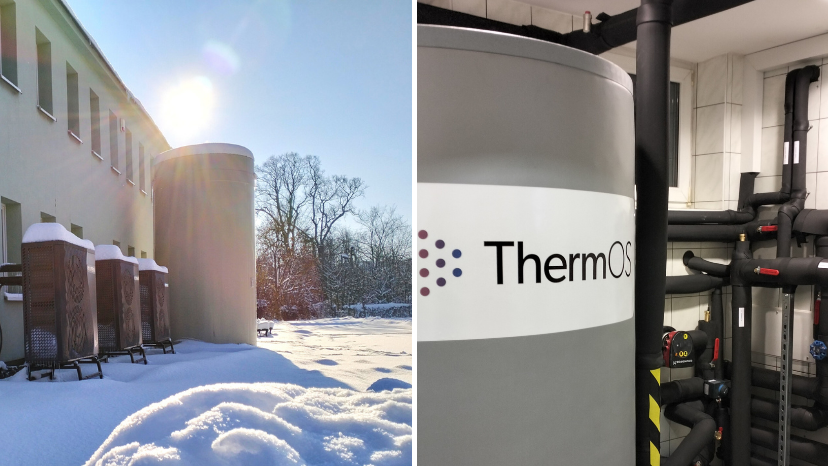
The winter season is one of the most demanding tests for building energy systems – it quickly reveals the stability of heat sources, operating costs, and how resilient the system is to changing weather conditions. That is why, during this period, solutions that can manage energy in a building reliably – even under volatile conditions and pricing – are especially important. One such solution is ThermOS (Thermal Optimal System) developed by ConnectPoint, which has just been granted patent protection.
ThermOS (Thermal Optimal System) is a system designed for space heating, space cooling, and domestic hot water (DHW) preparation in buildings. In January 2026, our innovative approach to thermal energy storage – implemented as an integrated, low-temperature outdoor thermal storage unit that operates as part of the complete system – was granted patent protection (No. P.447775).
ThermOS was designed as a complete solution that can be applied across different types of facilities, including retail and commercial buildings, service facilities, office buildings, public buildings, hotels, and residential buildings. The concept is that the system helps better utilize on-site generated energy and reduce the consumption of energy purchased from external sources, while maintaining the required comfort levels and ensuring safe, reliable operation of the installation.
In practice, ThermOS can integrate, among other things, solar PV and a heat pump, thermal storage, as well as an analytics layer and a control application. The key point is that these elements are designed to operate together within one integrated system, rather than functioning as separate, independent devices.
| What sets this technology apart? The most important element of ThermOS is two-stage storage of heat and cooling:
|
The key feature of ThermOS is this two-stage storage approach – an internal buffer and an external storage unit. This allows the system to better match the operation of energy sources to variable renewable generation and to when the building actually needs energy. In practice, the solution is intended to help increase on-site consumption of PV energy and reduce grid electricity draw during higher-price hours.
Energy is stored in the form of thermal energy in water (for example, in the 45–55°C temperature range). This approach is widely used in hydronic heating systems and is valued for safety and predictable operation.
ThermOS aligns with the development of hybrid energy systems in buildings, meaning the combination of different energy sources and storage with intelligent control. The system can operate in both heating and cooling modes, and the control strategy aims to optimize when energy is produced, stored, and used. A very important aspect is the ability to work with a district heating substation / heat interface, which – by using network-supplied heat – can serve as a peak-load or backup heat source for the building, improving reliability and security of supply in uncertain times.
The patent protection (No. P.447775) defines the principles of how the solution can be used and may provide a foundation for further development and implementation partnerships, including under a licensing model.